
Jantar Mantar Student Protest: Why Students Took to the Streets Over Education and Exam Issues
New Delhi: The student-led protest at Delhi's Jantar Mantar became one of the most closely watched education-related demonstrations of 2026. What began around concerns over examination irregularities and alleged paper leaks expanded into a wider discussion about exam transparency, accountability, student welfare and the future of India's education system.
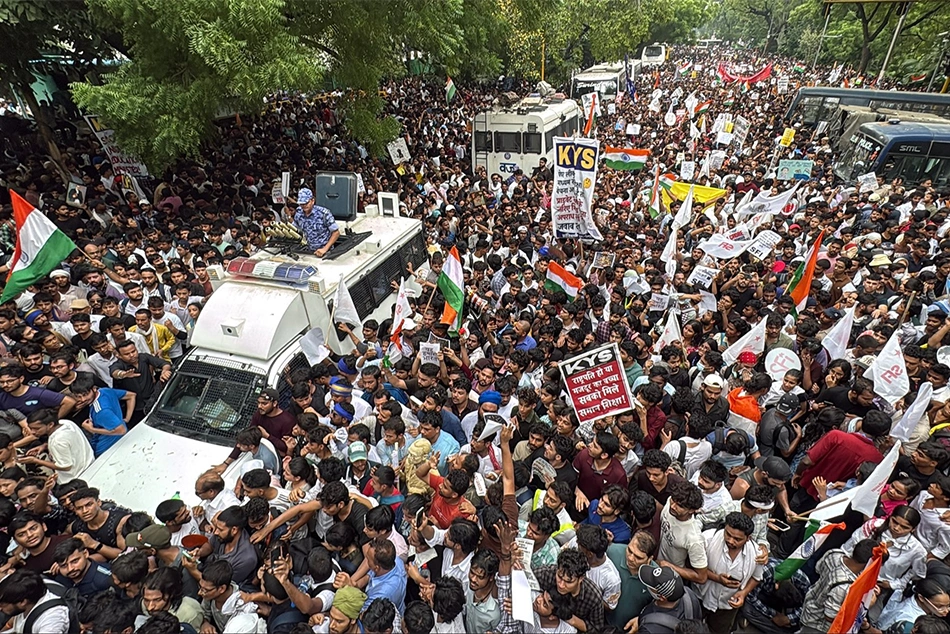
Students and young people gather during the Jantar Mantar protest in New Delhi.
Students, parents, competitive-exam aspirants and young professionals participated in the mobilisation. The protest attracted wider public attention because it connected examination-related concerns with broader questions about the reliability and accountability of India's education and recruitment systems.
Why Did Students Gather at Jantar Mantar?
A central issue behind the mobilisation was concern over alleged irregularities in competitive examinations. Students argued that examinations for admission and government employment must be conducted in a transparent and credible manner because the results can directly affect their education and career opportunities.
The protest movement initially focused strongly on alleged NEET-UG examination irregularities and demands for accountability. As the demonstrations continued, students also raised concerns involving other examinations, recruitment tests, evaluation systems and delays affecting young people.
What Were the Main Demands?
- Greater transparency in competitive examinations.
- Strict action against people found responsible for examination malpractice.
- Better safeguards against question-paper leaks and cheating.
- Accountability from institutions responsible for conducting examinations.
- Timely publication of examination schedules, results and related decisions.
- Better protection of students' academic and career interests.
Students Were Concerned About More Than One Exam
The protest also showed how examination controversies can become a broader education issue. Students at Jantar Mantar spoke about concerns involving school examinations, university entrance tests, recruitment examinations and the gap between private and public education facilities.

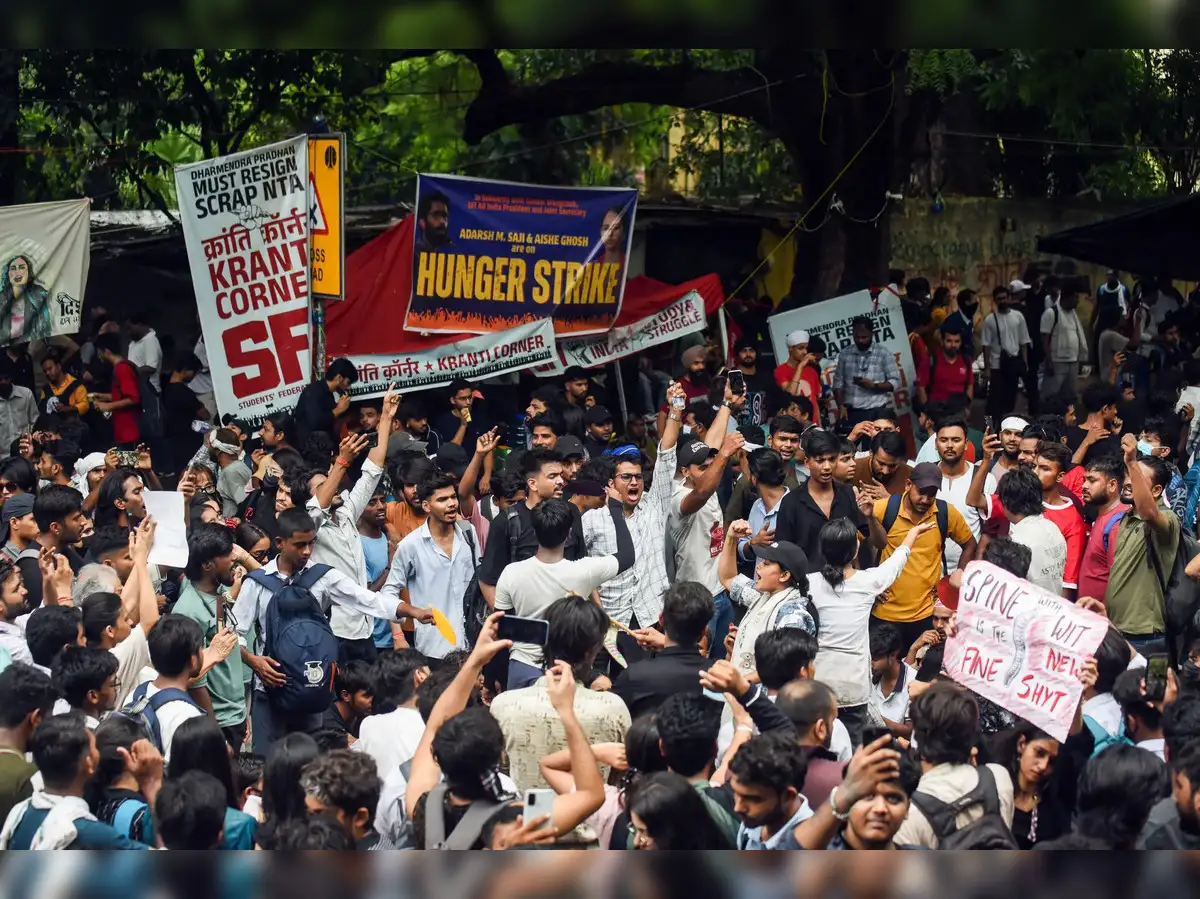
Students and supporters hold placards during an education-related protest at Jantar Mantar.
Reporting from the protest site found that some school students were also participating and raising concerns about CBSE evaluation, CUET delays and differences between private and government education. This widened the conversation beyond a single examination.
Why Examination Integrity Matters
Competitive examinations are high-stakes events. A student may spend months or even years preparing for an entrance or recruitment examination. Coaching fees, study materials, travel expenses and the opportunity cost of preparation can represent a significant investment for families.
When allegations of paper leaks, cheating or unfair evaluation emerge, students can lose confidence in the process. Even when an allegation is later disproved, uncertainty around an examination can create stress for candidates and families.
This is why examination systems need strong security measures, transparent procedures, reliable grievance mechanisms and timely communication with candidates.
What Happened at Jantar Mantar?
The protest continued for weeks and included rallies, sit-ins, speeches, hunger strikes and marches. The site became a meeting point for students, parents, activists and supporters discussing education-related issues.
On July 20, a planned march towards Parliament led to a confrontation between protesters and police. Reports said police used batons and tear gas as demonstrators attempted to move beyond security barricades. The incident resulted in injuries and became another major point of discussion around the protest.
A large crowd gathers at Jantar Mantar during the student-led education protest.
How Did the Government Respond?
The government said examination irregularities were being addressed and that action would be taken against those found responsible for wrongdoing. Prime Minister Narendra Modi also publicly promised strict action against people involved in examination paper leaks.
The protest movement continued to press for stronger accountability and political responsibility. The prolonged mobilisation eventually became a major national education and youth issue.
What Was the Outcome?
A major development came on July 25, when Union Education Minister Dharmendra Pradhan resigned. The resignation was welcomed by protesters and was widely viewed as a significant political outcome of the movement.
The protest had by then moved beyond its initial examination-related concerns and had become a wider youth movement focused on education, employment, accountability and institutional reform.
Why Did School Students Also Join?
One notable feature of the Jantar Mantar mobilisation was the presence of younger students. Some school students said their concerns included examination pressure, school conditions, CBSE evaluation and delays in university entrance examinations.
Their participation highlighted an important point: education policy affects students at different stages. A problem with an entrance examination can affect a Class 12 student, while examination pressure and school infrastructure can directly affect younger students.
What Can Be Improved in India's Examination System?
- Stronger paper security: Question papers must be protected through secure digital and physical systems.
- Transparent investigations: Allegations should be investigated quickly and independently where necessary.
- Better communication: Students should receive clear information about cancellations, re-examinations and results.
- Reliable grievance systems: Candidates need accessible channels to report problems and receive responses.
- Accountability: Institutions and individuals responsible for proven misconduct should face appropriate action.
- Student representation: Students should have meaningful opportunities to communicate concerns to examination authorities.
Lessons for Students and Parents
The Jantar Mantar protest also offers a broader lesson about civic participation. Students are not only examination candidates; they are stakeholders in the education system.
At the same time, students and parents should verify information before sharing claims about paper leaks or examination malpractice. Social media can spread both useful information and unverified allegations very quickly.
What Happens Next?
The long-term impact of the Jantar Mantar movement will depend on whether concerns about examination integrity lead to practical reforms. Students need more than short-term announcements: they need examination systems that are predictable, secure, transparent and capable of handling grievances fairly.
The protest also demonstrated how education issues can bring together school students, college students, parents, competitive-exam aspirants and young professionals. That wider participation could keep education reform in the national conversation.
Conclusion
The Jantar Mantar student protest became an important chapter in India's education debate in 2026. What started with concerns around examination irregularities developed into a wider demand for transparency, accountability and reforms.
For students, the central message is straightforward: examinations must be conducted fairly because their results can shape years of a student's life. For institutions, the movement underlines the importance of trust, transparency and timely communication.
The biggest test now is whether the attention generated by the protest results in lasting improvements to India's examination and education systems.
Editor's Note: This article discusses reported developments and allegations surrounding the 2026 Jantar Mantar student protests. Allegations of examination malpractice should not be treated as established facts unless confirmed through an official investigation or authoritative finding.
Comments
Post a Comment