
Jharkhand Student Protest: Why Students Were on the Streets and What Happened Next
Ranchi, Jharkhand: A prolonged student protest over alleged irregularities in government recruitment examinations became one of the state's major education and employment-related issues in August 2026. Students and job aspirants gathered in Ranchi demanding greater transparency, accountability and reforms in the recruitment examination system.

Students and job aspirants protest in Ranchi over recruitment examination issues.
The protest focused on concerns surrounding examinations conducted by the Jharkhand Public Service Commission (JPSC), Jharkhand Staff Selection Commission (JSSC) and other recruitment processes. Students alleged problems including examination irregularities, delays and concerns over the fairness of the selection process.
Why Were Students Protesting?
The agitation was driven by concerns among students and government-job aspirants about the credibility of competitive recruitment examinations. For many young people in Jharkhand, government examinations are an important pathway to stable employment, making transparency in the examination system a major concern.
Protesters demanded action against alleged irregularities and called for investigation and reforms in the recruitment process. Their demands included cancellation of certain examinations, an independent probe into alleged malpractice and stronger safeguards against future irregularities.
How Did the Protest Begin?
Students began an indefinite protest in Ranchi on July 25, 2026. The demonstration continued for several weeks as candidates gathered at protest sites and organised marches over their demands.
The movement later intensified. On August 10, students marched towards the Jharkhand Legislative Assembly, where police used barricades, water cannons and tear gas as the demonstration escalated.
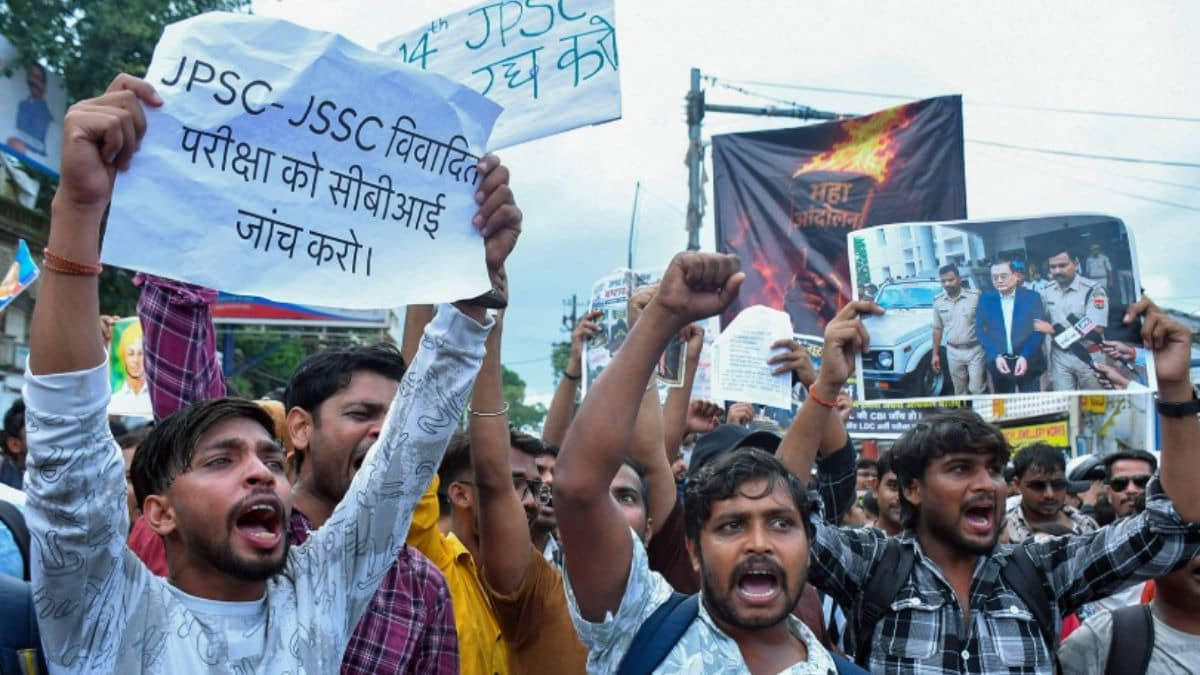
Students carry placards demanding an investigation into disputed recruitment examinations.
What Were the Students Demanding?
- Cancellation of examinations facing allegations of serious irregularities.
- An independent investigation into alleged examination malpractice.
- Greater transparency in JPSC and JSSC recruitment procedures.
- Stronger safeguards against paper leaks and cheating.
- Timely and fair conduct of competitive examinations.
- Accountability for anyone found responsible for irregularities.
Why Is This Issue Important for Students?
Competitive examinations can determine the career prospects of thousands of young people. Students often spend years preparing for government recruitment tests, investing significant amounts of time and money in coaching, study materials and preparation.
Any allegation of malpractice can therefore have a wider impact than the examination itself. Students who believe that the process is unfair may lose confidence in the recruitment system, while repeated delays or cancellations can create additional uncertainty for candidates.
What Happened During the Assembly March?
On August 10, protesters attempting to move towards the state assembly encountered heavy police deployment. Reports said security forces used water cannons, tear gas and batons to disperse demonstrators after barricades were breached.
The confrontation brought national attention to the student movement and intensified the debate over examination transparency and the government's response to the protesters.
Government's Response
The Jharkhand government engaged with student representatives as the protests continued. The administration said discussions and investigations were being pursued while protesters continued to press for stronger action.
On August 17, the state government announced the cancellation of the JSSC-CGL examination and also annulled examinations, results and selections associated with TDPL, a private agency involved in conducting examinations.
The announcement came after around 24 days of student agitation and marked a major turning point in the dispute.
What Happened to the Hunger Strike?
Student leader Devendra Nath Mahto had been on a hunger strike for 16 days. Following the government's announcement on the examination cancellations, he ended the hunger strike and described the decision as a major victory for the students.
Why Recruitment Exams Matter in Jharkhand
Government recruitment examinations are particularly important in a state where competition for public-sector employment can be intense. A large number of candidates compete for a comparatively limited number of vacancies.
This makes the credibility of recruitment bodies extremely important. Students need confidence that examinations are conducted fairly, results are released on time and complaints are investigated through transparent procedures.
What Happens Next?
The cancellation of the JSSC-CGL examination represents a major development, but it does not automatically resolve every concern raised by students. The next challenge will be establishing a transparent process for future examinations and addressing questions surrounding candidates affected by the cancellations.
The government will also need to rebuild confidence among students and job aspirants. Clear examination schedules, reliable security measures, transparent evaluation systems and timely communication could play an important role in restoring that confidence.
Conclusion
The Jharkhand student protest began with concerns over alleged irregularities in recruitment examinations but grew into a broader demand for transparency and accountability in the state's examination system.
The government's decision to cancel the JSSC-CGL examination and examinations, results and selections associated with TDPL marked a significant response to the prolonged agitation.
For students, however, the larger question remains whether the recruitment system can become more transparent, reliable and trustworthy in the future. The developments in Jharkhand could therefore have implications well beyond a single examination.
Editor's Note: This article discusses allegations and official developments around the Jharkhand recruitment-examination protests. Allegations of malpractice should not be treated as established facts unless confirmed through an official investigation or authoritative finding.
Comments
Post a Comment